Monday, July 17, 2006

Review - Open Mic/Wiseproof and the Harmogenous Dooji @ Simone's Jazz & Soul Cabaret

(7/14/06) Last night 377 2nd St. Oakland was off the hook! Taking place was the first night of an on-going open mic hereforth to be known as The Ambiguous Sipher brought to you from the hosts of San Francisco’s notorious CafĂ© International open mic (1st and 3rd Fridays @ 508 Haight St.) Dateurah and Wiseproof. In the club, couches lined the walls with veils hanging in between and incense hung in the air. The overall ambience was of an off the hook night club taken over for a night by a bunch of wacked out artists. The revolution is on. It all began with great vibrations, the audience was loud! Dre hosted the spoken word and MC section of the night and kept it original choosing artists randomly off the list.

The featured MC was Oakland’s own One throwing out a dose of his philosophy acknowledging the plethora of realities within one room and promoting only positive mental activity. Next up were the two spoken word features R.A.W. and Ise Lyfe. Ise Lyfe is a story teller who has been referred to as “Oakland’s unofficial poet laureate” and been featured on HBO. His story last night told of a group of animals debating how to get humans to stop eating them. He reminded me of the great Lord Buckley’s style, completely conversational with side jokes and thought provoking witticisms with an age old music flowing through it all. He summed up the moral of the story in the end with a fight between beans and corn bread that resulted in both dying. The moral: don’t promote violence or else you will have it turned on you.

The headliner was Wiseproof and the Harmogenous Dooji featuring guitar, drums, some studio beats and a guest appearance by Dakini. It was a massive amalgamation of musicians’ consciousnesses resulting in mirror-sounds, the band had never played together but all seemed to have styles that were given over Wiseproof’s hardcore lyrics and reggae stylin’. The percussionists fused together and fed off each other and Wise strung through the beats like intergalactic membrane. It was a fucking blast. Wiseproof and the Harmogenous Dooji will be featured at El Rio @ 3158 Mission St. and Cesar Chavez on Friday, July 28th.

Thanks to all who showed up as well as performed for making it a bad ass evening---

Friday, July 14, 2006

TRANSLATION - Rainer Maria Rilke - page a month

Everyone shares stories of their mother. A German officer; loud and long he says his words. Like a young girl forming a bouquet by pondering each flower’s worth, flower by flower, making a whole--: in this manner he fits his words together. For desire? To passionately suffer? All listen. The spitting stops. These men are sincere and know what they hear. Even those who know no German understand at once; can feel the words: “Abends”… “Klein war…”

Wednesday, June 21, 2006

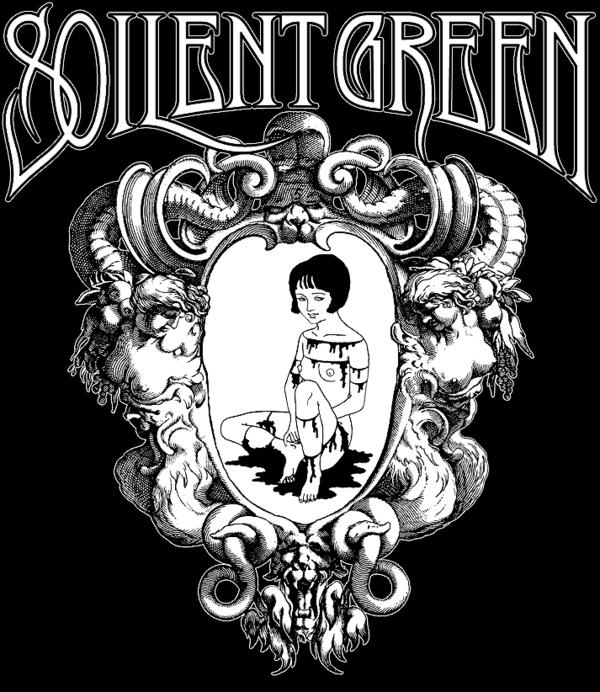
Review - Soilent Green/Walken @ The Elbo Room


Soilent Green’s Sewn Mouth Secrets managed to seep all the way into Maine’s back woods when I was in high school, their crusty thrasher sound and ADD time-changes carried me through the otherwise boring crap that surrounded me with hopes for better days; last night (6/19/06) at the Elbo Room was one such day. All three bands knew each other and came together for that reason as much as to play metal. Soilent Green drove up from San Diego to play this originally unscheduled show. Mendozza, traveling from Vancouver, covered the most distance and opened the set with slow sludgy riffs. The music reminded me at times of Kyuss and Sleep, at other times of other old extinct bands. The groove was mediocre but their stage presence was lacking.

Next up was Walken, I’d never heard of these guys but they’re from San Francisco and fucking rocked the place. A combination of harmonic guitar work reminiscent of the D.C. scene’s Page 99, Mannequin, and Crestfallen with sudden thrusts of screaming mayhem. Lead singer Shane Bergman kept the audience on its toes with hilarious commentary throughout the set as well as the occasional empty beer can. Walken were getting pummeled with empties by the second song. A couple people commented on the fact that the clean guitar work was sloppy but I can’t dwell on that. The over-all effect was an awesome show and the drunken stumblies over frets was not distracting, perhaps even expected. Shortly afterward I spoke with Sean Kohler (Walken guitarist with silly hat) and told him I wanted the album with the second and last songs they played on it, his response was that those songs will be on the forth-coming album so keep your ears open.


Soilent Green took the stage with a presence of experience and their sound was amazing. Brian Patton’s Mesa Boogie guitar rig was the crunchy tone-filled fuzz almost as it is on the albums, just a little more distorted and FUCKING LOUD. They opened with Forgive & Regret off the new album Confrontation. Next up ripping into the southern-fried Sewn Mouth Secretes. Then back to the new stuff with Leaves Of Three. The changes were all there and brutal as fuck. The pit was soon dominated by inhumanly large dudes and the space before the stage completely bare. A few people mentioned that it was intimidating. I’m no megalithic mastication but I had a great time jumping around. However, having the space so open was a bummer, other than pit it was just a line, two-deep, along the front of the stage screaming with Ben Falgoust. But I wasn’t really paying all that much attention to that as Soilent Green grinded away. They played all of the jazzy interludes on Sewn Mouth Secrets and it felt like we were in the Louisiana swamp drinking fresh lemonade. Hell I even swatted a few flies. The crowd demanded an encore and received one of the heaviest songs I’ve ever heard from Soilent Green. Sick show!!!

Saturday, June 10, 2006

TRANSLATION - Rainer Maria Rilke - page a month

The man from Langenau shifts in his saddle and says: “Herr Marquis…”
His neighbor, the small fine Frenchman, had been quick to speak and laugh for the first three days. Now he is absent. He is like a child, that must sleep. Dust comes to rest and stays on his fine white collar; he doesn’t notice it. He has become a faded bouquet in his expensive saddle.
But the man from Langenau laughs and goes on: “Herr Marquis, your eyes are the same. Certainly your mother‘s eyes are the same--”
Then, all at once, the little man comes into bloom, brushes the dust off of his collar, and is like new.

Review - Hank III @ The Fillmore


Last night (6/8/06) the Fillmore Theater’s main floor was alive with boot stompin’ honky-tonkin’, shrill yee-haw’s were in the air, and toward the end of the night a giant circle pit crept up to center stage. Who else could it be, bringing together the elements of quality country and deathmetal, than Hank 3. The Murder Junkies were the opening act, the band formerly headed by G G Allin, featuring the vocals of Jeff Clayton of ANTISEEN. I missed their set due to some last minute whiskey drinkin’. The guy waiting with me for the 22 line to arrive turned out to be going to the same show and so we passed the wait with Jameson. Seven shots and one on the rocks in 45 minutes, not a bad start.

After arriving and getting drinks at the bar we stared at the sold out scene before us, cowboy hats of course, metal and country tour t’s---it was my first time in the theater and now I understand why so many people could call it there favorite venue in San Francisco; the room is huge but not too huge, with tables and balconies, and the stage is the entire width of the room more or less. Joe Buck, the bassist, came on stage while the equipment was being set up and gave one of his traditional snarls; Mohawk a mess dressed in cover-alls he set the crowd cheering. When Hank III, complete with the band, hit the stage the place exploded. He began by asking if everyone was ready to raise some hell tonight cause he was. You can imagine the response.

The first song was the title track off their new album Straight To Hell. They skipped the eerily gospel sounding intro on the album version and started the show off at rocket speed. Hank’s acoustic sounded like crisp metallic machinegun fire and then he broke in: “well, my worn out boots are takin’ me up town/ and I’m lookin’ for trouble and I wanna get loud/ serve me up a drink and I’ll shoot it back down” which seemed rather appropriate for our evening. I noticed that I was one of those obnoxious people who scream the lyrics as loud as they possibly can and that the couple in front of me had relocated, but then I realized also that I was one of hundreds of Hank fans doing so. Plus, wasn’t that what the lyrics were about?

The second song, coming off his original album Risin’ Outlaw, was one of several surprises Hank had in store that night. The next astonishment was Adam McOwen’s fiddle solo. I wish I could convincingly describe the rapid speed and hardcore intensity that he put through those speakers --- it blew away the entire crowd, you could look over and just see jaws across the board flapping in the tonal blast. At the end of the song/solo there was a half-second when everyone was still in shock, a brief glimpse into the swollen awe in everyone’s chest, and then a forest fire of applause. It wasn’t a Gibson Flying V, it was fiddle, but he could tour with Slayer and still kick ass.


Hank and co. must have played almost everything off of Straight To Hell with the crowd backing up the chorus lines and rebel yells in step with the more anti-establishment lyrics. That’s when it began to wear on me, these anti-pop catch-phrases were being gobbled up while some of his more impressive musical feats were passing by unnoticed, but that’s show business, right? The less familiar fans will grab onto the punch lines first, I just hope Hank doesn’t indulge them too much. Besides the new stuff he continued throwing in songs from his first two albums as well as a couple songs that I couldn’t place as covers and might have been brand new material. His cover of Johnny Cash’s Folsom Prison was dead on and felt immortal, just another bad ass country singer carrying on tradition. A pleasant surprise.

Toward the end of the set Joe Buck’s stand up bass was still a-thumpin’ and McOwen’s fiddle fingers a-flyin’ but Hank’s voice began to show the effects his metal sets are taking. The metal fans were growing restless too and after about an hour he closed up shop with Five Shots Of Whiskey, did a brief rockin’ switch with the Damn Band and Gary Lindsay on back up vox, then took intermission. At this point I was totally in the bag what with the many shots and massive hits of weed from pipes, joints and whatever else was being passed around. The rest of the show was spent jumping around in the pit and throwing metal horns to the sky; I think I remember him saying that a song was a Super Joint Ritual cover, the band that Hank joined up with Phil Anselmo from Pantera. Otherwise it was a heavy blur of metal.

Tuesday, May 09, 2006

TRANSLATION - Rainer Maria Rilke - page a month

Riding, riding, riding, through the day, through the night, through the day.
Riding, riding, riding.
And the courage has worn so and the longing grown so large. Never any mountains anymore, hardly a tree. Nothing dares stand up. Unknown buildings huddle, thirsty, by a marsh stream. Nowhere a tower. And always the same picture-- Man has two eyes too many. Only at times in the dark can a man believe he knows the way. Perhaps we return day after day to the same piece of land that we painstakingly won already under the strange sun. It could be. The sun is heavy like it is at home in the middle of summer. But we took our leave in the summer. The dresses of the women shone reaching for the ground… and now we ride all day. It must be autumn by now. At least somewhere, women sadly know of us.

Friday, April 21, 2006

TRANSLATION - Rainer Maria Rilke - page a month

R. M. Rilke wrote this as a young man (age 25) in one night, 1899. Though it tells the story of a man fighting in Hungery in 1663 it gained immediate success during its 1912 publication selling 8,000 copies in three weeks. I love this work for its simplicity; Rilke was capable of fitting a lot into basic physical gestures and landscapes.

Die Weise von Lieben und Tod
des Cornets Christoph Rilke


(The Lay of the Love and Death
of Cornet Christoph Rilke)

“…the 24th of November, 1663. Otto of Rilke / of Langenau / Granitz and Zierga / travelled to Linda to collect reperations for his fallen brother Christoph who fell in the campaign in Hungary. He demanded compensation / but the Lehensreichung would give nothing / Otto of Rilke walked into the same trap his brother Christoph had (a man in a beige uniform brought him the death certificate: Cornet in the Campaign of Baron von Pirovano the Imperial etc.. All the men on horseback of the Heyershen regiments…were deceased) and returned home…”

Friday, April 14, 2006

ZINE Review - WT Chronicles

Written by men and women on or below the poverty line, WT Chronicles gives a voice to people usually voiceless by exploring issues of class, gender, self-esteem, and life.

WT “White Trash” Chronicles was established by Jen and Sonia; both single mothers who balance work and community action. Jen works full time at a homeless shelter and Sonia volunteered to help rebuild Katrina-Country last spring. Jen is currently enrolled in the Stonecoast MFA program at the University of Southern and Sonia is a recent college graduate. Their mission statement describes WT Chronicles as “a publication celebrating working class writing and art” in an attempt to “fully explore the conditions of poverty that many Americans live under”.

I first met Jen and Sonia at a poetry reading held at Acoustic Coffee every Tuesday (located at 32 Danforth St.), and quickly noticed the effectiveness of the zine, then going into its 11th issue and 11th month. Inside of issue 11 the prose ranged from mamaspitfire’s essay on Class, Masculinity, and the Capitalist Blues, which used real life stories to show how the social construct of male-as-breadwinner has been used to exploit working class men, to The Boss, a work of fiction written by WonderBred about… you guessed it. WT Chronicles also crams in poetry, cartoons, revolutionary lyrics, black and white illustrations, and samples of essays written by recognized writers responding to the politics of class. Not an inch of space is wasted because of the number submissions that Jen and Sonya receive each month.

Besides revealing the local talent, Jen and Sonya have used WT Chronicles as the focus of an educational lecture at the University of Southern Maine and held a benefit with the Portland Victory Gardens Project to benefit Maine Books for Prisoners. This latter feat was achieved by presenting a night of poetry, much of which was previously published in the zine. The turnout filled every seat in the room and left many standing. Since my initial encounter, WT Chronicles has reached its 14th issue and put up a website. If you aren’t in Portland the same week that Kinko’s gets ripped off and miss the printed version, visit wtchronicles.org to find selections from past and present issues’. Another way to get your hands on future WT Chronicles is to write Jen and Sonia at wtchronicles@hotmail.com. WT Chronicles will release a new issue next month (5/1/06).

Wednesday, April 12, 2006

Statue of a Human Head. . .


Made of Missing Shoes and
Coffee Cups or Dog Bowls


a dog lifts its leg

to the train

as it goes
whistling by

its owner.
how many times

sheltered
rhythms

one’s own heart beat
catches on

the sleeve
of a cabman driving

with a drunken fare
to Vegas marriage.

I bore him
for a moment

and it took all
my strength.

1/17/06

Review - Hank Williams III - Straight To Hell

The best approach to Hank III’s new double disc album Straight To Hell (released Feb. 28 ‘06 on BRUC Records) is to sit down just before dark with a bottle of whiskey and a joint the size of Grandma’s turkey baster; within seconds you will realize that the HELL raised tonight comes from a whole new dimension. Cause Hank’s music is a lifestyle, it’s a hell raisin’, honky-tonkin’, pot smoking’, girly lovin’, train hoppin’, belt buckle wearin’, tattoed manifesto of a lil’ something called country. Hank and the Damn Band represent an American anti-culture that originated before Johny Appleseed even planted a tree and long before Garth Brooks showed up, as Hank’s family history attests. With his new album comes the next heel stompin’ jambory, and damn it’s been a while.

Straight To Hell’s sound, at first, is that of traditional country album. Steel guitar twang, boppin’ bass, fiddle-sqeal, and banjo strummin’ announce the first song. It sounds like an ancient record found at some garage sale that you happened to take home and haven’t stop listening to since. A rare find, a glimpse at old time reality--to help induce this skunky nostalgia Hank and the Damn Band did all the recording themselves in a “good wooden room” in Nashville, on a Korg D1600, as the album jacket boasts; a simple recording device with built-in CD burner. The ambiance is as low down and dirty as the lyric’s subject matter. But don’t be fooled, as steeped in tradition as this album appears, its full of surprises, like the sample of low rolling Satan-laughter 34 seconds into track 1.

The story-telling lyrics tell about living hard, the drinkin’ and druggin’ and how it’s all going down hill. But the morel is always the same: we’ll get by somehow, and there ain’t no other kind of livin’! Hank has a rare talent for putting the listener in the condition he describes. So maybe you haven’t woken up surrounded by empty bottles, broken glass, the sound of someone crying, and bullets in the walls, but gad-damn if he doesn’t put you there. And if you have been there, he’ll comisserate with you about it. Hank’s other favorite subject is heartbreak, a subject everyone can relate with, though this album is not as saturated with love songs as his last release, Lovesick, Broke & Driftin’. The lonesome cowboy isn’t gone completely, Hank’s yodel still rings true on many songs, imbibing them with sorrow, but the hard partying cowboy wrote most of this album.

Besides the 13 tracks on Disc 1, Hank III gives a 42 minute long track on Disc 2. It is a solo perfomance full of psycodelic samples, tweaked production, and good ol’ country songs. Disc 2 reveals Hank’s desire and ability to take country in truly original directions. Songs proudly mock polite society as well as “pop country” by combining country crooning with punk and metal screams lowly mixed into the background. The overall effect is a violence that many will find distasteful, exemplified in Not Everyone Likes Us: “I think I’d rather eat the barrel/ of a double farrel loaded shotgun/ than hear that shit/ they call pop country music/ on 98.1”. But the bottom line - straight up - distorted screams have never been mixed with traditional country before this album. And only Hank III could make it work. Straight To Hell is written for anyone who loves good ol’ country music and likes raisin‘ a little hell. Don’t expect Straight to Hell to let you go to bed early, but if you play it at Grandma’s she probably won’t listen carefully enough to catch all the Satan stuff.

Blueberries By The Bay

Maine is one of the largest producer of blueberries in the world and consequently has a fondness for the small colorful fruit. And not simply for its taste. With recent studies showing that eating blueberries is good for your health, the rest of the world has begun to take notice of blueberries, and this means more business. But behind the world-wide trade of blueberries and the big companies like Wyman’s or Cherryfield Foods Inc., lie the small Maine communities who make it all possible.

I grew up in Cherryfield Maine, a five and half hour drive to Boston, an hour drive to New Brunswick Canada, a five minute drive to the Atlantic ocean. Ever heard of it? Few people have, though it is the “blueberry capitol of the world”. There, blueberries are a way of life. At age 12 every August began to take on a new meaning: three to four weeks of waking up before the sunrise and to spend a grueling day bent over on the blueberry barrens raking beneath a hot sun, treelines in the distance, the only source of shade.

Arriving on the barrens, the bushes are still covered with the night’s dew. I wear several layers of clothes to keep warm though all but shorts and a t-shirt will be left when the day is through. I grab my rake and a stack of boxes and move toward the first available row. After a few jabs with my rake, my hands and feet are soaked and my back aches from the days before. I can smell the sweet fermented scent of crushed blueberries underfoot. How am I going to manage another 10 to 12 hours of this?
The days are filled with hard work but something invaluable comes with this yearly harvest: co-workers. Maine’s blueberry harvest employs around 8,000 annually, many of whom come from out-of-state, bringing with them a brief period of cultural diversity in my usually quiet town. To judge how close the season is to beginning, I need merely observe the number of new faces at the local “corner store”. The majority of blueberry harvesters are Mexican or Native American, however people from all walks of life are present.

The relationships that develop on the barrens rarely last longer than the blueberry season, though some lead to one or two letters. As people travel from all-over to come rake they have stories from all over. A Mic-Mac Indian from New Brunswick was at one time the Golden Gloves Champion of the world (though he was not a very good raker). Another man I met had worked with my favorite actor a couple months before in Texas. Felix, a Mexican who spoke strong English, would tell me about his family back home and how they depended upon the blueberry harvest. He also taught me how to eat a Mango. Later in the year, perhaps on a winter day, I might receive a letter from a fellow raker now far from Maine, in a place I could only dream about at 12.

Now the cultural diversity is here to stay. The migrant influx has resulted in making my hometown one of Maine’s most culturally diverse, quite a feat for a downeast town of just over 1000 inhabitants. And it was the blueberries that brought the diversity. At the end of the sweaty day, drinking by the water truck, I learned that the world is a much larger place than the street I grew up on and the town whose limits might also have been mine. Every August the lesson is taught again.